AC Bill Calculator FAQ: Inputs, Accuracy, and Best Use
Quick Answer
An AC bill calculator is most accurate when you use your actual kWh rate, realistic daily runtime, correct AC size, and the system efficiency rating from the equipment label or documentation.
Use the calculator
Generate your AC cost estimate from this guide
Enter your AC size, runtime, SEER or EER rating, and electricity rate to turn this article into a personal cooling-cost estimate.
An AC bill calculator is a planning tool. It helps you estimate what cooling may cost, compare usage scenarios, and decide whether maintenance or an upgrade deserves attention. It is not a replacement for your utility bill, but it can make the bill easier to understand.
What information gives the best estimate?
The most important input is your electricity rate per kWh. You can usually find it on your utility bill. Next, estimate how many hours per day the AC runs. Then enter system size, wattage, or efficiency rating. The more specific your inputs, the more useful the estimate.
What does the calculator actually calculate?
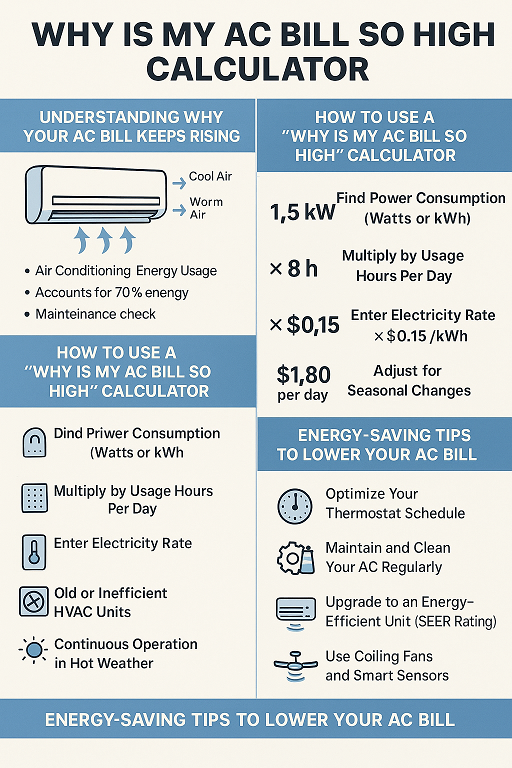
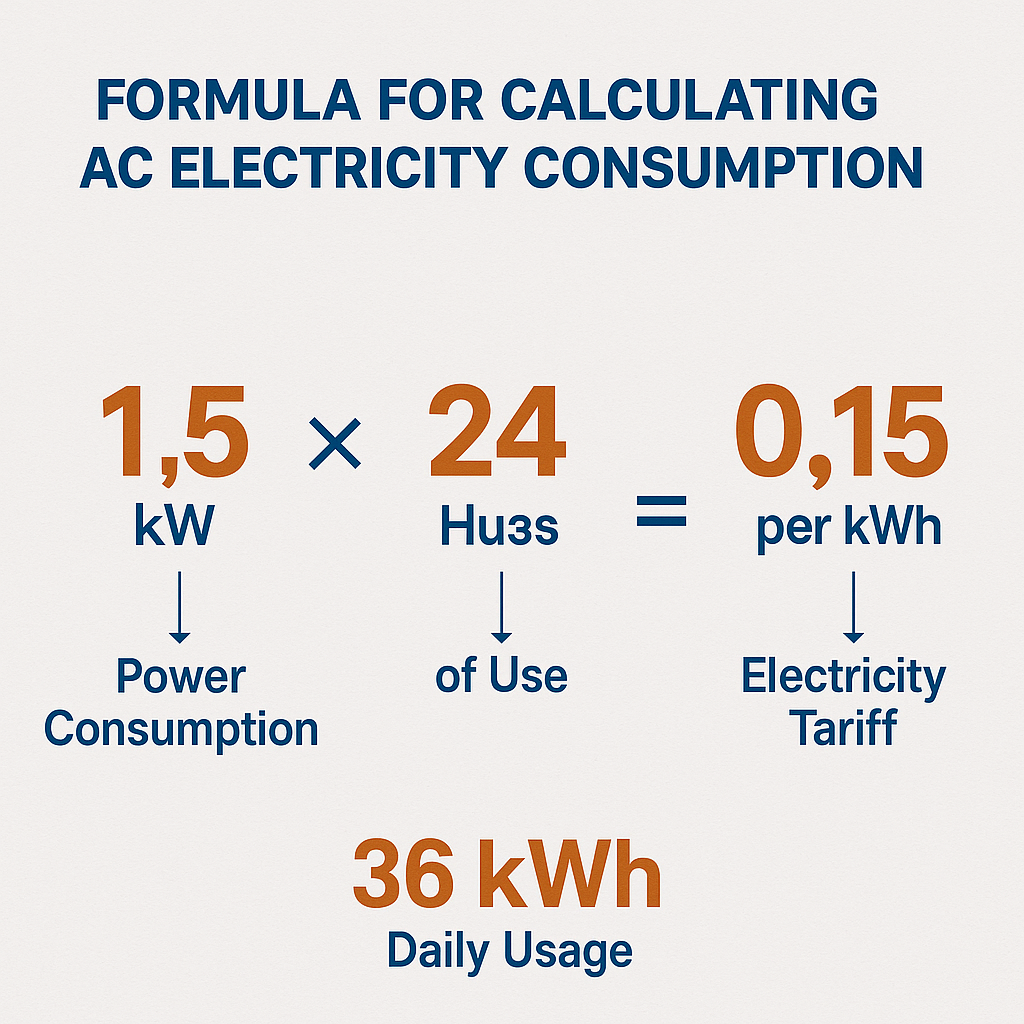
The core formula is simple: power in kW x hours used x electricity rate. For monthly estimates, multiply daily cost by the number of cooling days. For seasonal estimates, multiply by the expected cooling season.
Why estimates are not exact
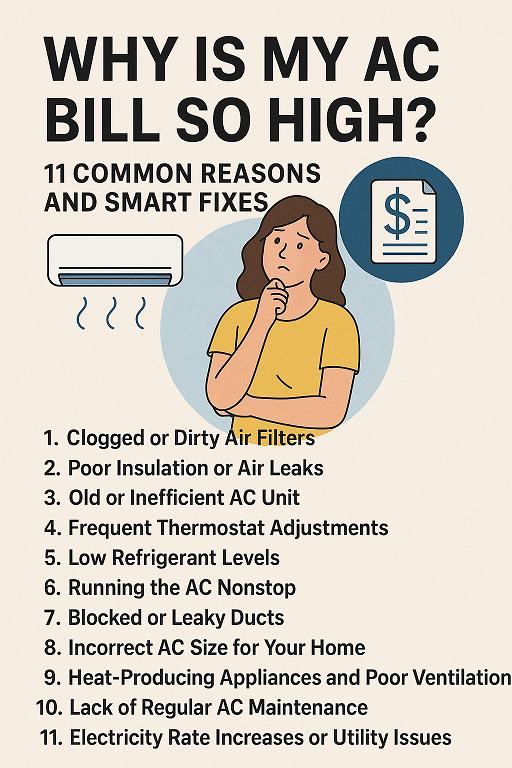
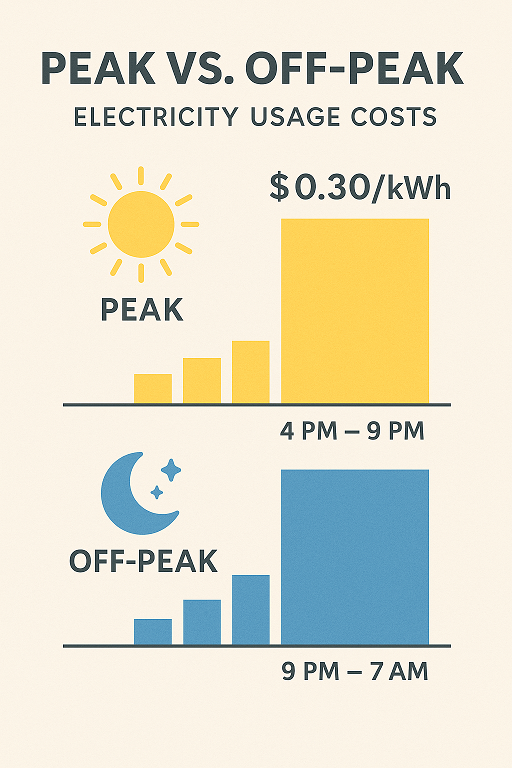
Real AC use changes with weather, humidity, thermostat settings, insulation, duct condition, maintenance, and occupancy. Your utility bill also includes lighting, cooking, laundry, electronics, taxes, fees, and sometimes time-of-use pricing.
How to use the result
Use the estimate to compare choices. What happens if you raise the thermostat two degrees? What if runtime drops by two hours? What if you upgrade from an older low-efficiency unit? Scenario comparison is where a calculator becomes most useful.
Bottom line
Use your real utility rate, honest runtime, and correct equipment details. Then treat the output as a decision guide for comfort, maintenance, and energy planning.
Key Takeaways
- Use your actual electricity rate from your utility bill whenever possible.
- AC cost changes most with runtime, system efficiency, local climate, and maintenance condition.
- Calculator results are planning estimates, not a replacement for a utility bill or professional HVAC diagnosis.
- For a personalized number, run the same scenario in the AC Bill Pro calculator.
Related AC Cost Resources
FAQs
What inputs do I need for an AC bill calculator?
Use electricity rate, daily runtime, AC size or wattage, efficiency rating, and number of days. Location improves estimates when local rate or climate assumptions are available.
Why is my calculator result different from my bill?
Your full bill includes other appliances, taxes, fees, weather changes, and rate structures. The calculator estimates AC operating cost, not the entire home bill.
Editorial Methodology
AC Bill Pro reviews AC cost guidance against the standard kWh cost formula, SEER/EER efficiency assumptions, and publicly available energy-efficiency guidance. This article was last reviewed on June 24, 2026. Use your own utility rate for the most accurate estimate.
About the Editorial Team
The AC Bill Pro Editorial Team writes educational cooling-cost guides focused on calculator methodology, electricity-rate inputs, AC efficiency, and practical homeowner decisions.
Read about our review process