BTU Rating vs Power Consumption: What Really Matters?
Use the calculator
Generate your AC cost estimate from this guide
Enter your AC size, runtime, SEER or EER rating, and electricity rate to turn this article into a personal cooling-cost estimate.
Introduction to BTU vs Power Consumption in AC Units
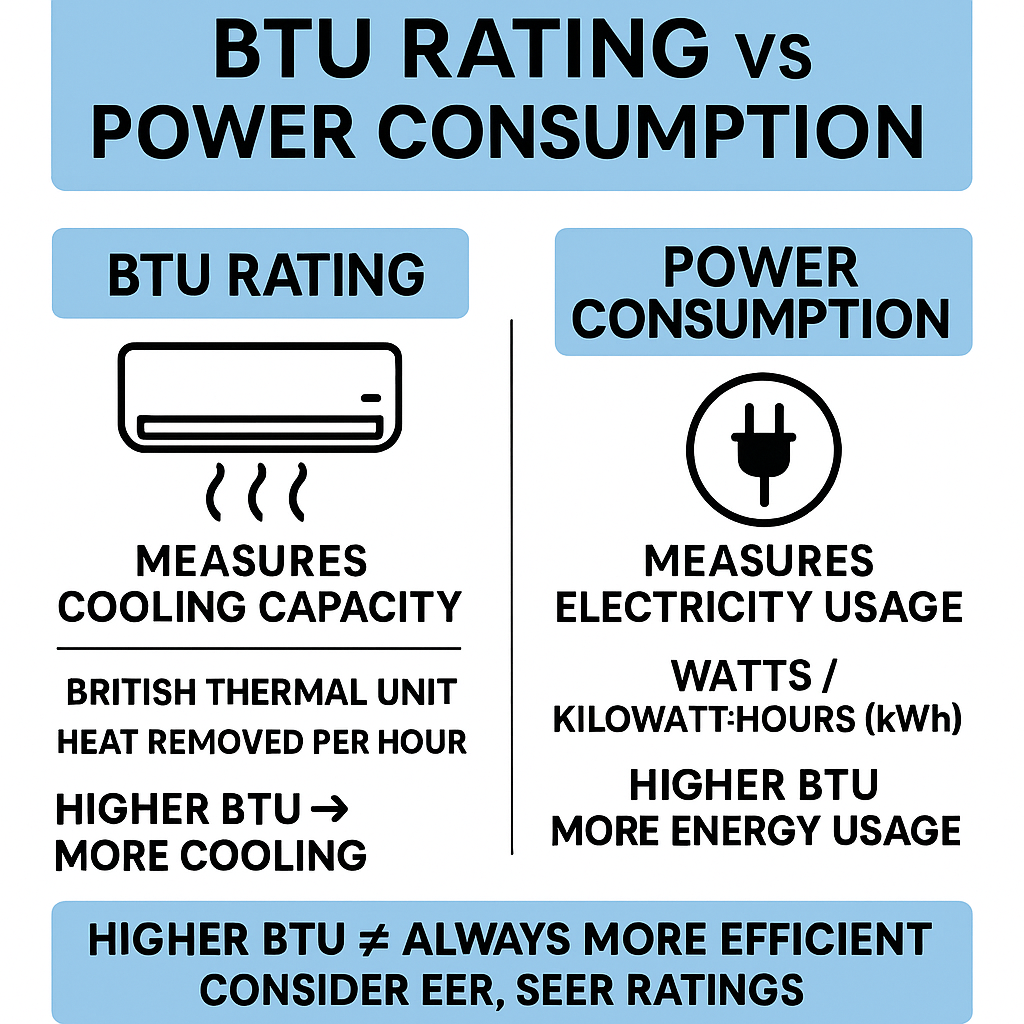
Two terms that are used repeatedly when shopping for an air conditioner are BTU rating and power consumption. Buyers also have a common misconception that increasing the BTU gives better performance. But is this really true? To make an intelligent choice, you should know the difference between cooling capacity (BTU) and power consumption (watts/kWh).
This article will explain the true meaning of BTU, the relationship between BTU and electricity usage, and how you can find the right size AC that cools efficiently without increasing your electricity bill.
What is BTU in Air Conditioners?
Definition of BTU (British Thermal Unit)
BTU stands for British Thermal Unit, which is a unit of heat energy. Simply put, 1 BTU is the number of BTUs it takes to raise the temperature of one pound of water by 1 degree Fahrenheit.
With regards to ACs, BTU is aimed at quantifying the degree of heat taken out of a room by the unit after every hour.
How BTU Relates to Cooling Capacity
- Small bedrooms are appropriate with a 5,000 BTU AC.
- 12,000 BTU AC (1 ton) is used in medium rooms.
- Large halls can be cooled with a 24,000 BTU AC (2 ton).
The bigger the BTU rating the more area the AC can serve--but that does not always translate into greater efficiency.
Understanding Power Consumption in ACs
Wattage, Voltage, and Energy Efficiency Ratio (EER)
The amount of power consumed is expressed in watts or kilowatt-hours (kWH). It informs you about the amount of electricity that the AC consumes when operating.
Energy Efficiency Ratio (EER) is used to compare heating energy (BTU) to power consumption (watts).
- Formula: EER = BTU / Power (W)
- Better efficiency is higher EER.
Seasonal Energy Efficiency Ratio (SEER) Explained
SEER takes seasonal variations unlike EER (measured under constant conditions). A higher SEER rating = lower electricity bills over time.
BTU Rating vs Power Consumption: The Core Difference
Why Higher BTU Doesn’t Always Mean Higher Efficiency
A 24,000 BTU AC can cool things well, but a small room only needs 12,000 BTU of cooling, so a larger unit will consume more energy and will also cost more. A larger AC doesn't make things more comfortable - it makes them less efficient.
The Role of Compressor Technology (Inverter vs Non-Inverter)
- Inverter ACs regulate compressor speed, and use less power.
- Non-inverter ACs operate at full capacity, which increases the consumption of electricity.
Despite identical BTU rating, inverter models tend to use 30-40 percent less power.
Common Sizing Mistakes When Choosing an AC
Undersized AC: Overworking and Energy Waste
A smaller unit has poor cooling capacity, and it runs all the time, has low power-per-hour consumption.
Huge AC: Greater Bills and ineffective humidity.
A large unit is on and off-peak, resulting in inferior cooling, and ineffective humidity regulation and wastag
How to Calculate the Right AC Size for Your Room
BTU Per Square Foot Guidelines
- 100–150 sq. ft. → 5,000 BTU
- 200–250 sq. ft. → 6,000 BTU
- 400–450 sq. ft. → 10,000 BTU
- 1,000 sq. ft. → ~18,000 BTU
Considering Climate, Sunlight, and Insulation
- Btus are needed in hot climates.
- Different rooms that are poorly insulated or face the sun require additional capacity.
- Less may be required in shaded well-insulated rooms.
Practical Examples: BTU vs Power Consumption
1-Ton AC vs 1.5-Ton AC Energy Usage
- 1 Ton (12,000 BTU) → ~1.2 kW per hour
- 1.5 Ton (18,000 BTU) → ~1.8 kW per hour
Window AC vs Split AC Efficiency
Split ACs usually feature higher EER and SEER rating and are more efficient at similar BTUs.
Tips to Reduce AC Power Consumption
Smart Thermostat Usage
Maximum comfort and saving should be 24-26 degrees Celsius of AC.
Proper Maintenance & Cleaning
Frequent cleaning of filters, coil and servicing enhance the flow of air and save on energy that goes to waste.
Energy Star Rated Appliances
Always look at the Energy Star or BEE ratings prior to purchase- these models conserve up to 30% of electricity per year.
FAQs: BTU vs Power Consumption in ACs
1. Does a rise in BTU imply increase in consumption of electricity?
Not always. It is based on the size of rooms and efficiency ratings.
2. Is 1.5 ton better than 1 ton AC?
Only when you have room that needs it. Otherwise, it wastes energy.
3. Which consumes less power, invertor or non invertor AC?
Inverter ACs are less-power-consuming because they adjust the rate of compressor working.
4. How to find AC power consumption?
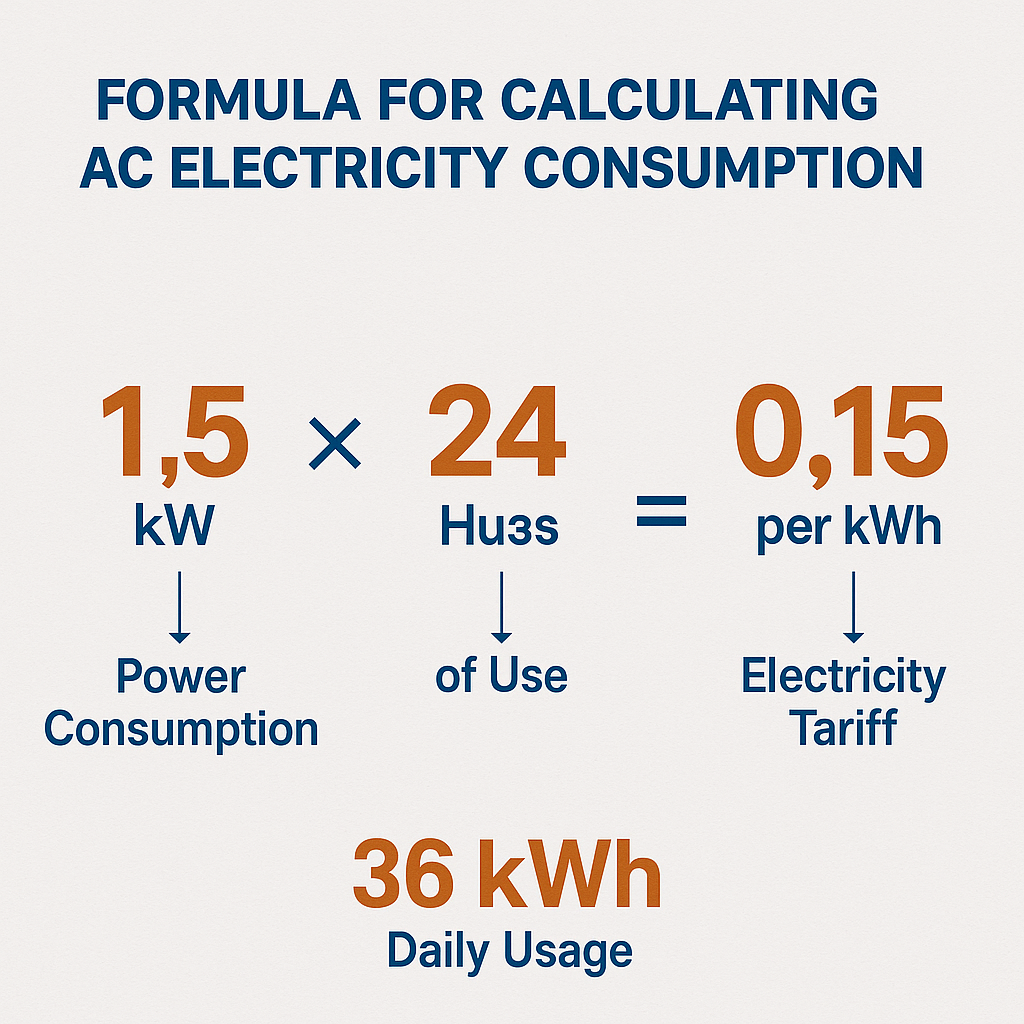
divide wattage x hours used/1000 to obtain kWh.
5. So what is the best temperature to save electricity?
Somewhere between 24-26 o C is most efficient and comfortable.
6. Will more BTU AC in a small room run?
Yes, but it will recycle too fast and will have ineffective humidity regulation and squandered energy.
Conclusion: Choosing the Right Balance
Comparing the BTU vs the power consumption in the ACs, keep in mind:
- Cooling capacity is measured by BTU.
- Power consumption measures electricity usage.
- This is based on efficiency that relies on EER, SEER, and inverter technology.
The trick here is to find the right BTU for your room size and focus on models that are energy-efficient. A moderate solution will be comfortable and won't drain your wallet or the power grid.
Key Takeaways
- Use your actual electricity rate from your utility bill whenever possible.
- AC cost changes most with runtime, system efficiency, local climate, and maintenance condition.
- Calculator results are planning estimates, not a replacement for a utility bill or professional HVAC diagnosis.
- For a personalized number, run the same scenario in the AC Bill Pro calculator.
Related AC Cost Resources
Editorial Methodology
AC Bill Pro reviews AC cost guidance against the standard kWh cost formula, SEER/EER efficiency assumptions, and publicly available energy-efficiency guidance. This article was last reviewed on August 31, 2025. Use your own utility rate for the most accurate estimate.
About the Editorial Team
The AC Bill Pro Editorial Team writes educational cooling-cost guides focused on calculator methodology, electricity-rate inputs, AC efficiency, and practical homeowner decisions.
Read about our review process